🏝️ Phu Quoc Island (Vietnam)
Context: Vietnam's Phu Quoc Island, popularly known as the "Pearl Island", has emerged as one of Southeast Asia's fastest-growing tropical tourism destinations, renowned for its pristine beaches, rich biodiversity, and thriving marine economy.
📖 PRELIMS POINTER
🔹 What is Phu Quoc Island?
- Phu Quoc is the largest island of Vietnam, located in the Gulf of Thailand.
- Popularly known as the "Pearl Island", it is famous for its white-sand beaches, turquoise waters, tropical forests, fishing villages, and luxury resorts.
- It forms the administrative centre of the Phu Quoc Archipelago, comprising 22 islands.
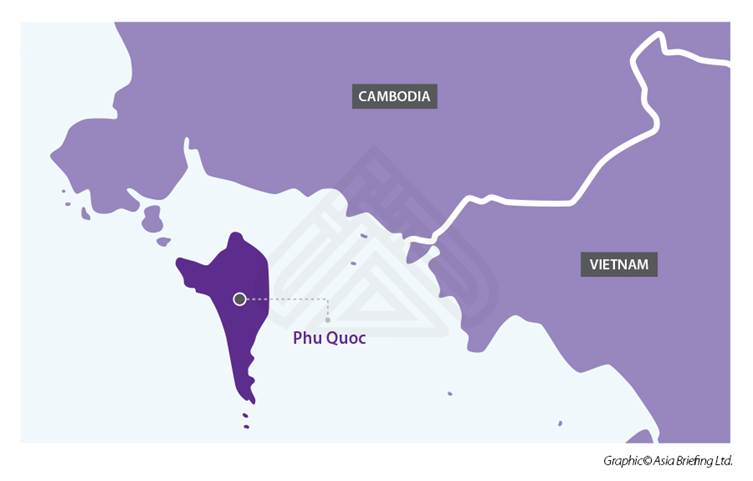
🌍 Location & Geography
- Located in the Gulf of Thailand, off the southwestern coast of Vietnam.
- Lies close to the coast of Cambodia, but is under the sovereign jurisdiction of Vietnam.
- Covers an area of approximately 574 sq. km.
- Extends nearly 50 km from north to south.
- Forms the largest island within the Phu Quoc Archipelago.
🌿 Natural Environment
- Possesses over 150 km of coastline with numerous beaches and bays.
- Features evergreen tropical forests, waterfalls, caves, streams, and rocky pools.
- The island's highest peak rises to about 630 metres.
- More than 50% of the island is protected under the UNESCO Kien Giang Biosphere Reserve (designated in 2006).
- Supports rich terrestrial and marine biodiversity, including coral reefs, mangroves, and seagrass ecosystems.
💼 Economy
- Tourism is the island's fastest-growing economic sector.
- Traditional livelihoods continue to depend on:
- Marine fishing
- Agriculture
- Aquaculture
- Internationally renowned for:
- Traditional fish sauce (Nuoc Mam)
- Black pepper cultivation
- Pearl farming
🛕 Cultural & Religious Heritage
- Home to several Cao Dai temples, reflecting Vietnam's unique religious traditions.
- Caodaism is a syncretic religion that integrates elements of:
- Buddhism
- Taoism
- Confucianism
- Christianity
- Islam
- The island also preserves traditional fishing villages and local cultural practices.
UPSC Takeaway:
Phu Quoc Island, Vietnam's largest island in the Gulf of Thailand, is an important centre for tourism, marine biodiversity, and sustainable island development. With over half of its area protected under the UNESCO Kien Giang Biosphere Reserve, it exemplifies the balance between economic growth, biodiversity conservation, and cultural heritage preservation.
Phu Quoc Island, Vietnam's largest island in the Gulf of Thailand, is an important centre for tourism, marine biodiversity, and sustainable island development. With over half of its area protected under the UNESCO Kien Giang Biosphere Reserve, it exemplifies the balance between economic growth, biodiversity conservation, and cultural heritage preservation.